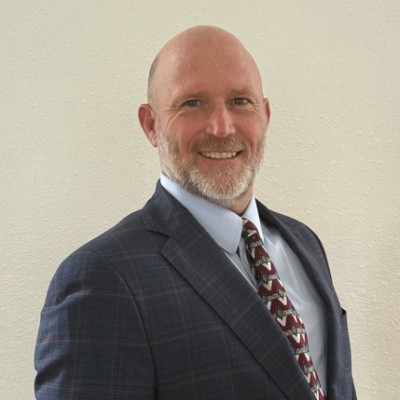
Founder · PE · Master Code Professional
These kits aren't designed by a sourcing operation. They're designed by a licensed Professional Engineer who spent 30 years understanding exactly where structures fail — and built a greenhouse business around not letting that happen.
The Short Version
Most greenhouse kit companies are sourcing operations — they didn't design anything, they assembled a catalog. CatchSunlight is different because the person who designed the kit is a licensed PE with 30+ years of applied structural and thermal engineering experience. That isn't a background detail. It's the reason the frames don't buckle under snow loads that collapse other high-tunnels.
Russ Livesay holds engineering credentials that most people have never heard of — because most people don't need them. Greenhouse buyers do, whether they know it or not.
Credentials — And What They Actually Mean
These aren't resume items. They're the qualifications that determine whether a greenhouse structure survives the conditions you're putting it in.
A PE license means a state board has verified professional competence through examination and experience requirements. In engineering, it's the difference between someone who studied the subject and someone the state has vetted to practice it professionally. Russ's Mechanical Engineering PE covers thermal systems, fluid mechanics, and materials behavior — directly applicable to greenhouse design.
Why it matters: he calculated the insulation value, the thermal performance in freezing conditions, and the material behavior of the polycarbonate under thermal cycling. Not estimated — calculated.
A second PE license in a separate engineering discipline. Fire Protection Engineering is concerned with how structures behave under thermal and mechanical stress — load paths, failure modes, structural response to extreme conditions. Holding two separate PE licenses is uncommon. It reflects breadth of applied engineering competence that most single-discipline engineers don't have.
Why it matters: understanding structural failure modes is exactly the expertise that determines whether a frame buckles or holds. Russ understands failure because understanding failure is part of his day job.
The ICC's Master Code Professional designation is the highest credential issued by the International Code Council — the organization that writes the building and fire codes adopted across the U.S.. Earning it requires passing roughly 18 separate proctored exams covering every major code domain: structural, fire, plumbing, electrical, energy, and accessibility. Russ is one of only two people in the state of Idaho to hold this designation.
Why it matters: he designed these structures knowing exactly what the codes require, where agricultural exemptions apply, and where the real risk lives versus where there's paperwork risk. That's not knowledge most kit sellers have.
Graduate-level engineering education in two separate disciplines. The combination means the technical foundation behind CatchSunlight's kits isn't informed by general industry practice — it's informed by applied engineering science at the graduate level.
Why it matters: when a question comes up about material specs, load ratings, or thermal performance, the answer comes from engineering first principles, not from what a catalog says.
Not theoretical. Three decades of engineering practice — designing systems, reviewing failures, understanding how materials and structures perform in real-world conditions that lab testing doesn't fully capture. That experience is behind every CatchSunlight kit specification.
Why it matters: experience is what closes the gap between "it should work" and "it does work." Russ has been on the wrong side of that gap enough times professionally to know what it costs — and he's built the kits to avoid it.
Mission
The goal is simple: make households and small farms more food-independent, and reduce the carbon footprint of agriculture in the process — through market-driven, affordable, durable design.
Not through subsidies. Not through ideology. Through building a product that's genuinely better than the alternatives — engineered to last, priced fairly, and designed for the climates where it actually needs to perform.
Agriculture accounts for roughly 25% of U.S. carbon emissions. A meaningful fraction of that is the supply chain between where food is grown and where it's consumed. A household that grows its own food year-round in a properly engineered greenhouse has materially reduced that supply chain for itself. That's not a claim — it's arithmetic.
The engineering credentials exist because durable structures require proper design — not because CatchSunlight needs to market itself as technical. A kit that fails in year three is worse for food independence, worse for the environment, and worse for the customer than not buying one at all.
Call a representative for clear answers. CatchSunlight will tell you directly what makes sense for your situation.
3179 W 2700 N · Arco, Idaho