USDA NRCS · Environmental Quality Incentives Program
The NRCS EQIP high-tunnel grant typically covers around $8,000 for a 1,000 ft2 structure. CatchSunlight greenhouses are EQIP-compliant by design. For grant applications and paperwork, contact your local NRCS/USDA Service Center directly — they administer the program and are the right resource for eligibility and application questions.
NRCS field office agents are available to help you navigate the grant application process.
The Process
The process is straightforward once you know the steps. Here's the honest version, including the one thing that trips people up.
Your site needs to have a prior "cropped" history — evidence that it's been used for agricultural production. If your site doesn't have that history yet, rototilling the area and demonstrating it has been farmed is a known, acceptable workaround. Your local NRCS field office can confirm what documentation they need.
Find your local NRCS Service Center — the field office staff will walk you through the application. You can also start the EQIP application process at nrcs.usda.gov.
Most applicants are approved. You'll typically hear back within a few months. The award amount is determined by the NRCS based on structure size — commonly around $8,000 for a 1,000 sq ft high-tunnel. Awards for other sizes and structure types vary; ask your field office.
Once approved, you purchase and install the structure. CatchSunlight systems are EQIP-compliant by design — no modifications needed. See the polycarbonate eligibility note below if your field office has any questions about glazing material.
After installation, an NRCS inspector visits the site. Once the structure passes inspection, the grant is reimbursed to you. The timeline from installation to reimbursement varies by field office — plan for several weeks to a few months.
The One Thing People Don't Expect
Some NRCS field offices have a mistaken belief that the high-tunnel grant only applies to poly-film structures. This is incorrect. Polycarbonate is explicitly eligible under the EQIP high-tunnel program — the eligibility criteria are based on the structure type (high-tunnel), not the glazing material.
If your field office raises this objection, ask them to consult the NRCS EQIP practice standard for high tunnels (Practice Code 325). The relevant NRCS program language clearly covers polycarbonate glazing. Your local Service Center should be able to resolve this with their state office if needed.
For all grant application questions, contact your local NRCS/USDA Service Center directly — they administer the program and are the authoritative source for eligibility and application guidance.
Find Your Local NRCS Office →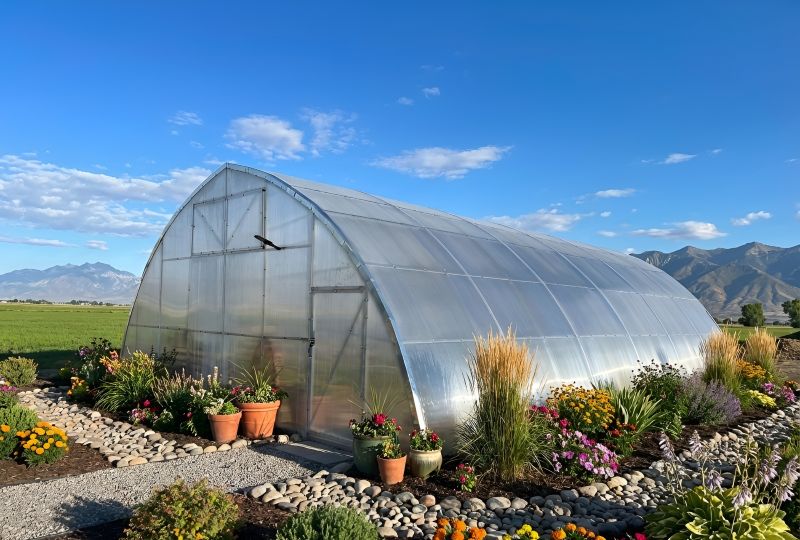
Depending on your field office and project, other NRCS programs may cover smaller gable greenhouses or provide up to $5,000 toward installation costs. Availability varies by location and funding cycle. Ask your local NRCS field office directly.
Building Permits
Most western states exempt agricultural structures from the full IBC/IRC structural requirements. In practice, this means high-tunnels installed on agricultural land typically don't require a building permit.
Because these structures aren't engineered and stamped for occupancy under the building code, snow load management is the owner's responsibility — not the installer's. In practice, this means monitoring snow accumulation and removing it before it exceeds the structure's rated load. The CatchSunlight snow-shedding arch design handles most conditions, but heavy or wet snow events should be monitored. Always confirm permit requirements with your local jurisdiction before installing.
Your local NRCS Service Center is the right starting point — they handle applications, confirm your eligibility, and answer all grant questions.
Questions about CatchSunlight kits? Contact us here — we're happy to talk specs, but have to defer to NRCS regarding grant paperwork.