Food Independence · Lower Emissions · Durable Design
Not through subsidies or policy — through durable, affordable greenhouses that let households grow more of their own food locally, with less waste and less plastic than the supply chain they're replacing.
Material Choice
The sustainability case for polycarbonate over poly-film comes down to two numbers: how long it lasts and heat retention. Poly-film on typical high-tunnel structures is replaced every few years. Each replacement generates plastic waste, consumes manufacturing energy, and requires disposal of the old material. Additionally, the poly-film covering provides minimal protection from energy losses resulting in high heating costs.
A 6mm 4-layer polycarbonate structure has a 10-year warranty and is built to last for decades. It's design also has an inherent insulation factor that provides much better thermal performance.
The embodied carbon of a durable polycarbonate structure — amortized over its lifespan — is materially lower than the cumulative footprint of repeated poly-film replacement, even though polycarbonate has higher upfront material intensity. Longevity is the key variable.
What a Greenhouse Actually Does
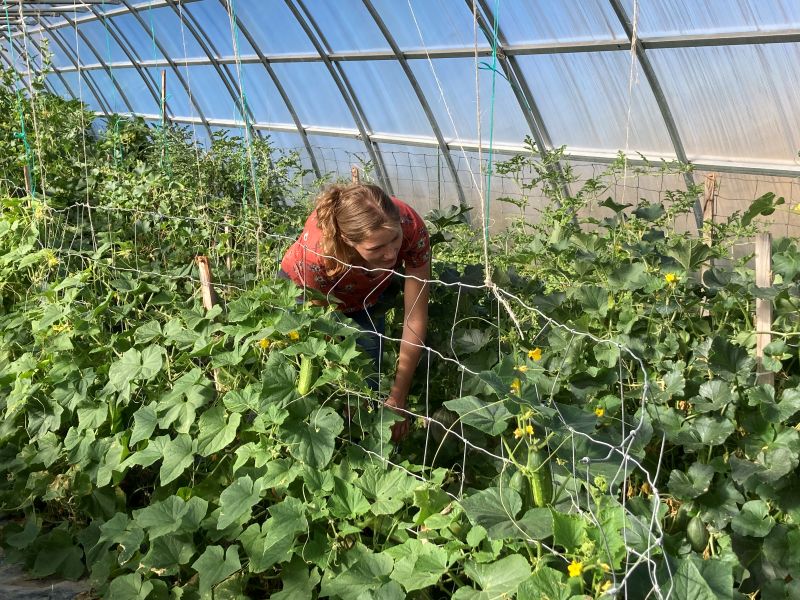
The sustainability argument for a backyard or farm greenhouse isn't theoretical. Here's what actually changes when you grow your own food in an enclosed structure.
Greenhouse growing enables direct composting of kitchen and garden waste into the beds — closing the nutrient loop without shipping organic matter to landfill. No-till methods preserve soil structure and microbial life over time.
Enclosed growing reduces evaporative water loss and eliminates runoff. Precision watering in a controlled environment consistently uses less water than open-field production for the same yield.
Produce grown at home arrives at your kitchen without plastic clamshells, bags, or shrink-wrap. Across a full growing season, a household greenhouse replaces a meaningful amount of single-use packaging from the supply chain.
In cold climates, a greenhouse makes many crops feasible year-round that would otherwise require a store-bought supply from warmer growing regions many hundreds of miles away.
Less distance traveled, fewer distribution steps, and no dependence on a supply chain that can fail. A household or small farm with a producing greenhouse has meaningful resilience that a shopper does not.
The R-2.2 insulation in CatchSunlight polycarbonate means many crops winter successfully with ambient solar gain alone — no supplemental heat in many climates. The structure earns its keep by retaining heat, not by requiring it.
How We Practice This Ourselves
CatchSunlight's own operation in Arco, Idaho is 13,000 sq ft of greenhouse space used to test sustainable growing methods in real conditions — the same harsh climate and soil most of our customers are dealing with.
The facility runs on an off-grid solar microgrid — not because grid power isn't available, but by deliberate choice. Manufacturing, irrigation, and facility operation are 100% solar-powered. No grid connection. No diesel backup.
Farming is done without tillage, with manual and solar-automated systems, and without tractor-based mechanization. The goal is to demonstrate that productive growing at scale doesn't require industrial inputs — and to refine the methods we pass on to customers.
This isn't marketing positioning. It's what we built, how we run it, and what we've learned from it. If you're trying to set up something similar, call and ask — CatchSunlight will tell you what worked and what didn't.
Talk to CatchSunlight · 208-520-4625
See It Built
These are filmed at our own off-grid property in Arco — the real builds behind the sustainability numbers above, not a highlight reel.
Full drip line installation
How we grow in the winter
Power system built as a shed

Convert fuel tank to composter
Broken fridge for seed starters
Used paint buckets for pots
Waste into mushrooms
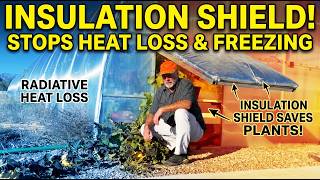
Protects from radiation losses
Durable systems for growers who want food independence without the annual plastic replacement cycle.
3179 W 2700 N · Arco, Idaho